These cash shortages increase banks' funding costs, making it harder for them to lower lending rates

Reserve Bank Governor Shaktikanta Das on Wednesday said in the wake of appreciating US dollar, the movement of rupee has remained least disruptive as compared to its peers, and the size of foreign exchange reserve is comfortable. On a financial year basis (from April to October 2022), the rupee has appreciated by 3.2 per cent in real terms, even as several major currencies have depreciated, he said while announcing the latest set of bi-monthly monetary policy. "The story of the rupee has been one of India's resilience and stability," the Governor said while pointing out that the appreciation of the US dollar this year, which precipitated large-scale depreciation of all major global currencies including the Indian rupee, has drawn wide attention.

Equity indices nursed losses for the second consecutive session on Tuesday as investors continued to dump IT, banking and FMCG stocks amid a bearish trend in global markets. Unabated foreign fund outflows and the rupee dropping to another record low against the US dollar added to the woes, traders said. Participants were also in wait-and watch mode ahead of release of retail inflation and factory output data.
An action on the rate front is unlikely to figure in Rajan's plan for the moment.

'Markets are likely to remain choppy for the next 6 months.'

India's economy is projected to slow to 6.5 per cent in the fiscal year starting April but will remain the fastest growing major economy in the world as it fared better in dealing with the extraordinary set of challenges the globe has faced, the Economic Survey 2022-23 said on Tuesday. India's gross domestic product (GDP) growth of 6.5 per cent in 2023-24 compares with an estimated 7 per cent expansion in current fiscal year (April 2022 to March 2023) and 8.7 per cent in the previous year. Like the rest of the world, India too faced an extraordinary set of challenges in tightening financial conditions and supply chain disruptions from a prolonged war in Europe but "withstood them better than most economies", the annual document detailing the state of the economy said.

In twin blows to Indian economic revival, higher food prices drove retail inflation to a five-month high of 7.4 per cent while factory output fell for the first time in 18 months. The second consecutive month of rise in consumer price index (CPI)-based inflation will add to the pressure on the Reserve Bank of India (RBI) to again raise interest rates to tame high prices. Inflation has been above the targeted zone for the ninth month in a row and as per statute, the RBI will now have to explain to the government in writing why it failed to keep prices below 6 per cent.

'At current valuations, we believe large-caps offer better downside support.' 'Hence, we are suggesting a small tilt towards them.'

The Fed interest rate decision, domestic macroeconomic data announcements and quarterly earnings will be the major sentiment drivers for the equity market in a holiday-shortened week ahead, analysts said. Investors will also take cues from the monthly auto sales numbers to be announced on Monday. Equity markets will remain closed on Thursday for Diwali Laxmi Pujan and on Friday for Diwali Balipratipada.

The $5.7 billion total includes $1.6 billion in fines separately imposed by the US Federal Reserve on the five banks.

US stocks rose more than 1% on Tuesday, with the S&P 500 coming less than 2% below its record peak set last month.

The Indian currency had appreciated by a whopping 85 paise in three-day surge

Experts believe volatility is here to stay for some time, at least till China stabilises and clarity regarding the US Fed's interest rate move emerges.

The US dollar index, which measures greenback's strength against a trade-weighted basket of six major currencies, was up 0.14 per cent at 96.74.
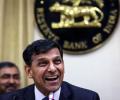
Growth acceleration will be gradual and it is still early days for a sharp recovery, says Gautam Chhaochharia, executive director and head of India research, UBS.

The rupee on Wednesday declined by 16 paise to close at its fresh lifetime low of 77.60 against the US dollar amid unabated foreign fund outflows and a stronger greenback in overseas markets. At the interbank foreign exchange market, the rupee opened lower at 77.57 and later hit the day's low of 77.61 as the dollar rebounded in global markets following hawkish comments from US Federal Reserve chief Jerome Powell. Crude oil prices also surged over 1 per cent, which weighed on the rupee.

We have not suffered such huge price shocks across so many basic commodities, at the same time, in decades. Has the inflationary impact of all this been factored into stock prices as yet, asks Debashis Basu.

Jehanabad: Of Love And War authentically captures Bihar's political skullduggery and caste violence, observes Deepa Gahlot.

'The potential headwind is that the Indian economy is likely to see a slowdown in growth rates over the next two years.'

Continuing their massive selling spree for the ninth consecutive month, foreign investors dumped Indian shares worth Rs 50,203 crore in June -- the highest net outflow in over two years -- amid aggressive rate hike by the US Federal Reserve, elevated inflation and relatively higher valuation of domestic equities. Foreign portfolio investors (FPIs) have now pulled out around Rs 2.2 lakh crore from domestic equities in the first six months of 2022 -- the highest-ever net withdrawal by them. Before that, FPIs withdrew Rs 52,987 crore in the entire 2008, data with depositories showed.

Benchmark BSE Sensex tumbled 566 points to settle below the 60,000-level on Wednesday, dragged down by heavy selling in banking and IT stocks amid weak global trends.

Equity benchmarks had another rough day on Monday, with the Sensex plummeting 1,457 points and the Nifty tumbling to the 15,774 level, mirroring an extremely weak trend in global markets along with unrelenting foreign fund outflows. Index majors ICICI Bank, Infosys and Reliance Industries bore the brunt of heavy selling. The 30-share BSE Sensex tumbled 1,456.74 points or 2.68 per cent to settle at 52,846.70.

'The markets seem apprehensive and that explains why the markets have been feeling slightly uncomfortable ahead of the Budget.' 'After the event, when all the concerns are resolved and clarity emerges, markets will decide what to do next.'

Benchmark indices Sensex and Nifty gave up early gains to close lower for a fourth straight session on Thursday due to selling in IT and banking shares amid weak global equities. The 30-share BSE benchmark settled 98 points or 0.18 per cent lower at 53,416.15. During the day, it hit a high of 53,861.28 and a low of 53,163.77. The broader NSE Nifty also pared initial gains and ended 28 points or 0.18 per cent down to settle at 15,938.65.

The 30-share Sensex ended down 66 points at 28,438 and the Nifty ended down 15 points at 8,633.

After three consecutive years of infusing huge funds, foreign portfolio investors retreated from the Indian equity markets in a big way in 2022 with the highest-ever yearly net outflow of nearly Rs 1.21 lakh crore. The huge outflow, which surpasses by a big margin the previous record of Rs 53,000 crore net withdrawal in 2008, came amid aggressive rate hikes by central banks globally but 2023 is expected to be better on positivity about overall macroeconomic trends in India, experts said. Apart from global monetary tightening, volatile crude, rising commodity prices along with Russia and Ukraine conflict led to an exodus of foreign money in 2022.

Urjit Patel as the new RBI governor whose focus is on taming inflation has lowered the probability of interest rate cut soon

Market breadth depicted gains with 1,476 advances over 1,403 declines on the BSE. 140 stocks remained unchanged.

The policy statement by the RBI governor is also expected to be upbeat.

Brokers said investor sentiment turned choppy on selling by foreign institutional investors ahead of the September month derivatives expiry on Thursday.

Domestic equities will be mainly driven by global market trends, foreign institutional investors' movement and developments around new Covid variant Omicron this week, according to analysts. Markets traded under pressure last week following weak global cues and overall investor sentiment remained downbeat throughout the week, they observed. "Global markets, Omicron variant, dollar index and FIIs' behaviour will be key factors to drive the market this week," said Santosh Meena, head of research, Swastika Investmart Ltd. One major event last week was US Federal Reserve's announcement that it will end bond-buying from March, and it also signalled starting rate hike cycle thereafter.

Domestic equity markets are likely to see volatility in a range-bound trade this week amid geopolitical worries and growing expectations of a sharp hike in interest rates, analysts said. Global trends, inflation data and the last batch of quarterly earnings will drive the markets this week, they said. Besides, the rupee movement, FII investment pattern and Brent crude trends would also be watched by investors.
The rupee plunged 20 paise to close at an all-time low of 78.13 against the US dollar on Monday, as a lacklustre trend in domestic equities and stronger greenback overseas weighed on investor sentiments. Forex traders said weak Asian currencies and persistent foreign capital outflows were the other major factors that dragged the local unit down. At the interbank foreign exchange market, the local currency opened at 78.20 and witnessed an intra-day high of 78.02 and a low of 78.29 against the US dollar.
This was the biggest single-day fall for the benchmark index since August 10 when it had fallen by 310 points.

Morgan Stanley on Thursday became the latest brokerage to question the valuations of Indian equities and downgraded them from 'overweight' (OW) to 'equalweight' (EW) and recommended taking some money off the table. "We move tactically EW on India equities after strong relative gains - we expect a structural multi-year earnings recovery, but at 24 times forward price-to-earnings (P/E) we look for some consolidation ahead of US Fed tapering, an RBI hike in February and higher energy costs," Morgan Stanley equity strategists, led by Daniel Blake and Jonathan Garner, said in a note on Asia Pacific markets. The brokerage has upgraded Indonesia to OW, while maintaining an EW stance on China and UW on Taiwan.

For the first time, the rupee declined to the low level of 80 against the US dollar in intra-day spot trading on Monday before ending the session 16 paise lower at 79.98 amid a surge in crude oil prices and unrelenting foreign fund outflows. At the interbank forex market, the local unit opened at 79.76 against the greenback but lost ground to touch the psychological low mark of 80 against the American currency. The local unit clawed back some lost ground and closed at 79.98, registering a fall of 16 paise over its previous close.

Mr Modi might have questions to ask himself on the most formidable strategic challenge before India that he inherited from the United Progressive Alliance: The triangulation between China and Pakistan. The failure to break out of it, or even loosen it a bit, is something to reflect on, notes Shekhar Gupta.

Fed move based on US economic recovery, which should boost India's exports, narrow CAD and help curb 'imported' inflation

SBI was the top laggard in the Sensex pack, dropping over 5 per cent, followed by Sun Pharma, Maruti, Bajaj Finance, Tata Steel, Axis Bank and ICICI Bank. On the other hand, IndusInd Bank, Hero MotoCorp and PowerGrid were among the gainers.

The value of the foreign portfolio investors' (FPI) holdings in the domestic equities reached $667 billion in three months ended September 2021, a surge of 13 per cent from the preceding quarter, according to a Morningstar report. This was largely on the back of strong performance by the Indian equity markets along with net inflows from FPIs at the later part of the quarter. "At the end of the quarter ended September 2021, the value of FPI investments in Indian equities shot up sharply to $667 billion, which was considerably higher than the $592 billion recorded in the previous quarter, a spike of around 13 per cent," the report noted.
 © 2026 Rediff.com - Advertise with us - Disclaimer - Privacy Policy - Sitemap - Feedback - About us - Terms of use - Grievances